

















Good filtration and favourable weather conditions alone do not make pool water clear or hygienic. The correct use of pool chemicals has the greatest impact. Many common problems – green water, cloudiness, a strong chlorine smell or skin irritation – are usually caused by incorrect chemical dosing and the wrong maintenance sequence. Proper water care starts with a few key steps: pH balance, correct chlorination, filtration and regular testing. In this article, we will cover the most important principles that help keep outdoor pool water clean, clear and hygienic throughout the season.
1. Filling the pool with water
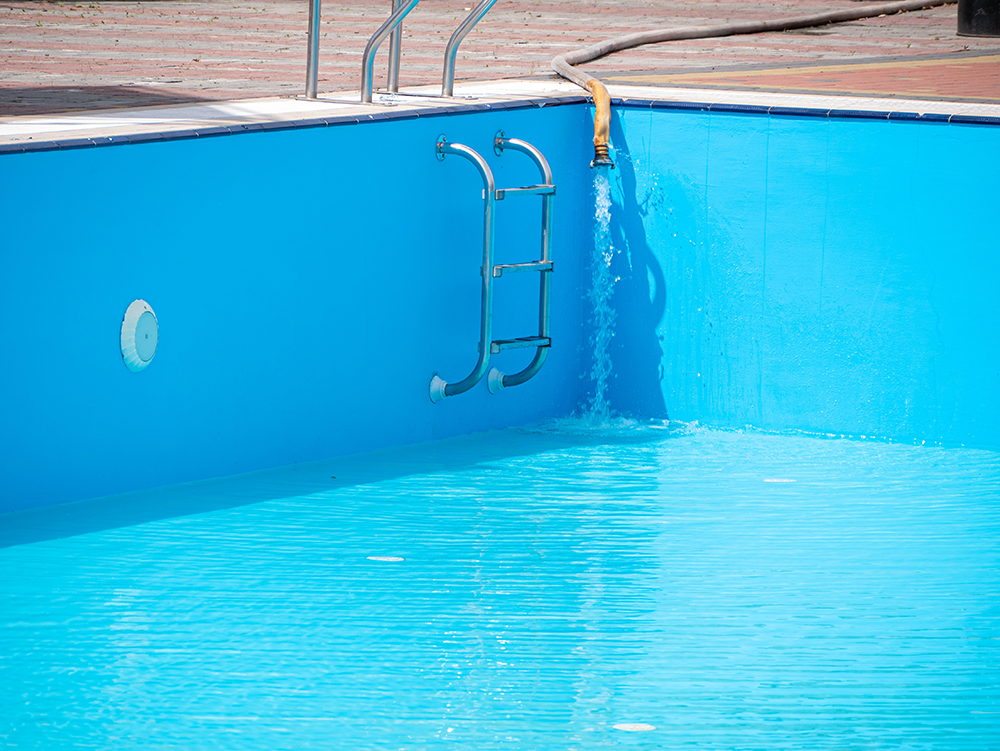
First, fill the pool with water up to the recommended level – usually around the middle of the skimmer. After filling, the filtration system must be started. The water should begin circulating before any chemicals are added, because only moving water allows the products to distribute evenly throughout the pool. After that, the first water measurements are recommended.
2. Measuring and adjusting pH
pH adjustment is always the first step before using any other pool chemicals. If the pH level is incorrect, even high-quality chlorine may work poorly or almost not at all. As a result, the water can quickly turn green, become cloudy or start to smell strongly of chlorine. The ideal pH range for pool water is:
- Recommended pH: 7.0–7.4
When pH is too high:
- chlorine becomes less effective;
- the water may become cloudy;
- limescale deposits may start to form;
- algae may appear more quickly.
When pH is too low:
- the water becomes aggressive;
- it may irritate the skin and eyes;
- it can damage pool equipment;
- metal corrosion accelerates.
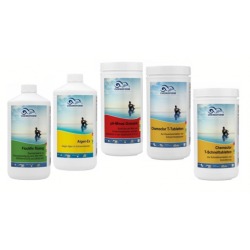
pH is adjusted using special products:
- pH Minus – when the pH is too high;
- pH Plus – when the pH is too low.
After correction, it is recommended to leave the filtration running for at least 20–30 minutes and only then test the water again.
3. Chlorine shock
Chlorine shock is used when the water needs to be disinfected quickly. It is most often needed:
- at the beginning of the season;
- after intensive pool use;
- after hot days;
- after heavy rain;
- if the water starts turning green or cloudy.
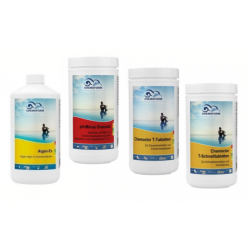
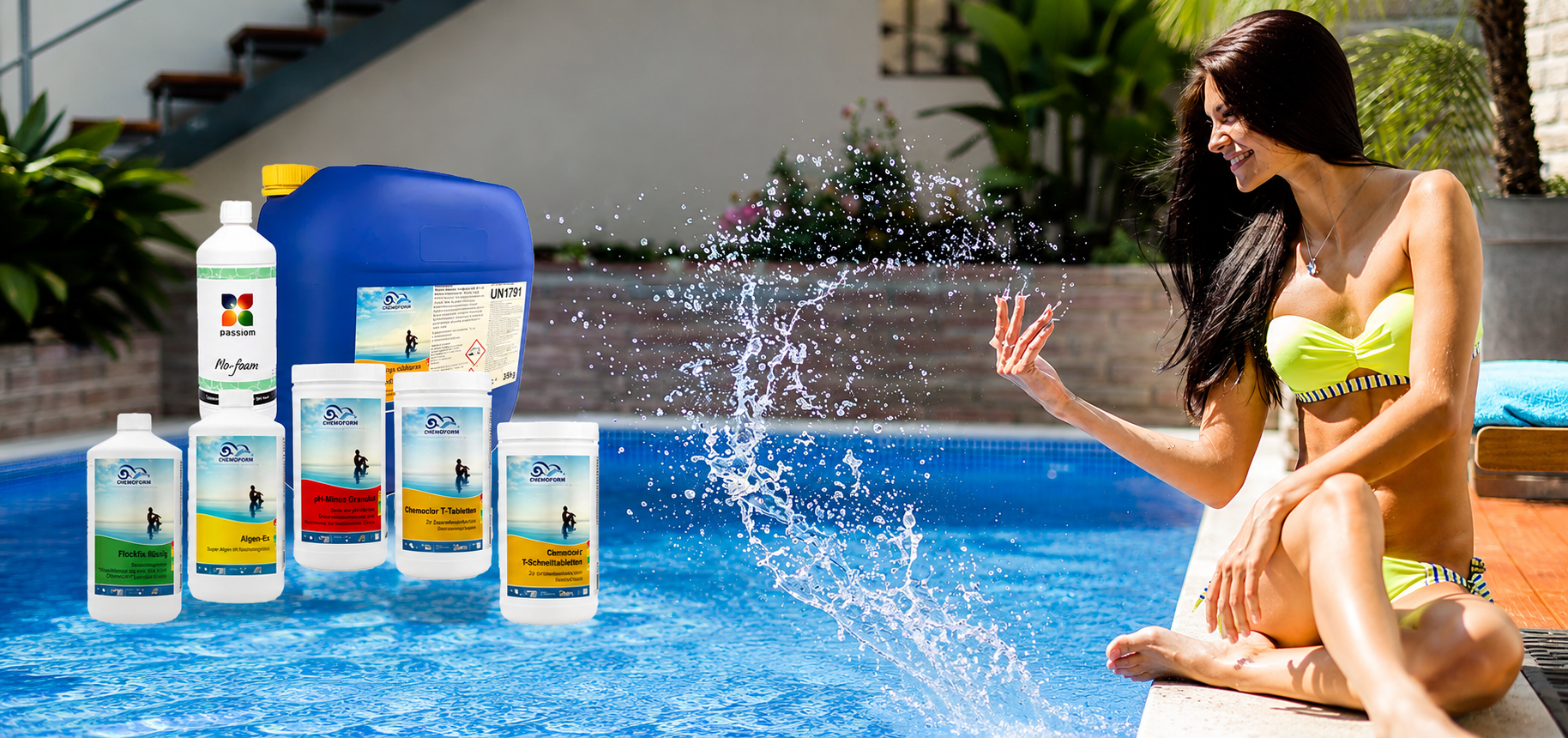
For shock chlorination, the most commonly used products are:
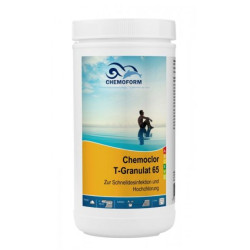
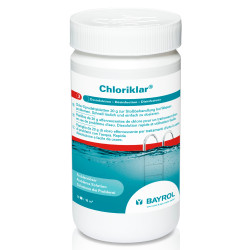
- chlorine granules;
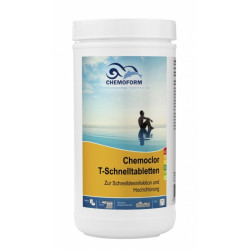
- fast-dissolving tablets.
Granules usually dissolve faster and are often used for quickly “refreshing” the water. Fast-dissolving tablets are also intended for a short-term stronger effect. After chlorine shock, filtration must run continuously for at least 12–24 hours. This is very important because the organic matter destroyed during disinfection must be removed through the filtration system.
4. Maintenance chlorination
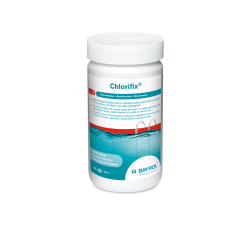
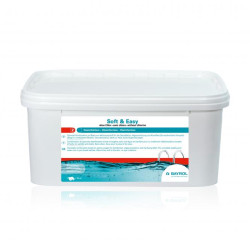
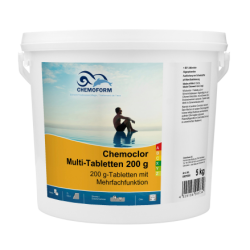
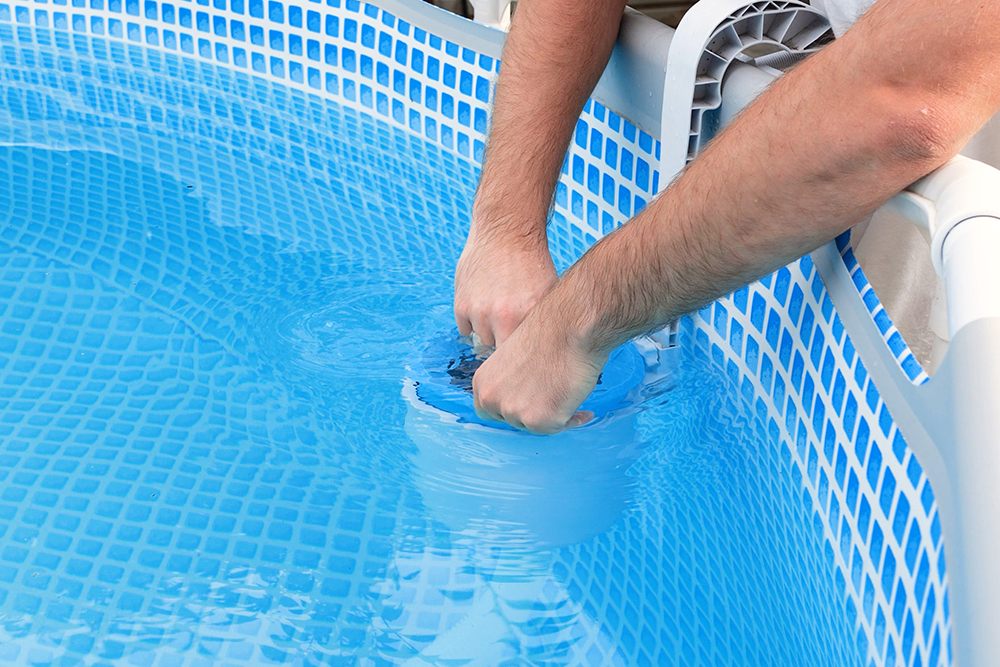
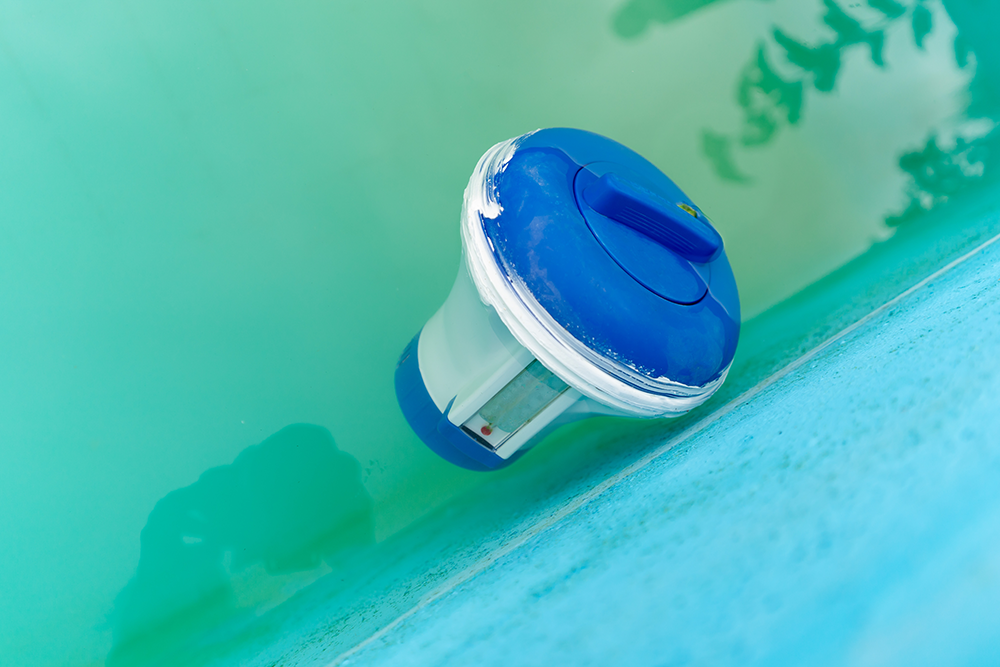
After the initial disinfection, regular water maintenance begins. Slow-dissolving chlorine tablets are most often used for this. They gradually release chlorine and help maintain a stable disinfection level. The tablets are usually placed:
- in the skimmer;
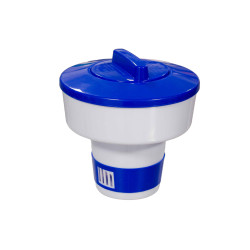
- in a floating dispenser;
A dispenser is often considered a safer choice for smaller pools because the tablets do not come into direct contact with the pool liner. In larger or automated pools, liquid chlorine systems may be used. These systems dose chemicals automatically and help maintain a stable chemical balance.
5. Algae prevention
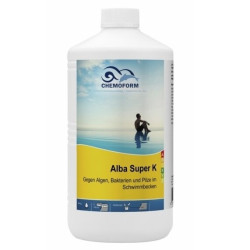
Even clear water can start turning green very quickly, especially on hot days. That is why algaecides are used additionally – products designed to help prevent algae. Algaecides:
- help slow down algae growth;
- support the action of chlorine;
- help keep the water clear for longer.
They are most often used:
- preventively once a week;
- after rain;
- during very hot weather;
- if the pool is used intensively.
It is important to understand that an algaecide is not a full replacement for chlorine. It is additional protection, not the main disinfectant.
6. Water clarification
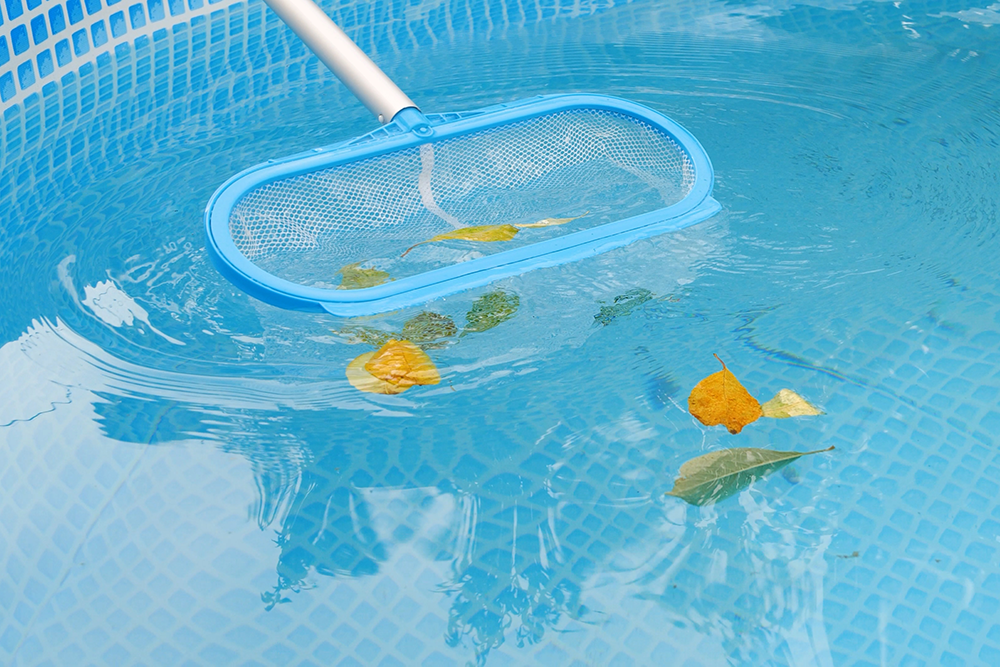
Sometimes the water is not green, but cloudy or “milky”. In this case, flocculants or coagulants may be used. These products bind fine particles into larger clusters, which the filtration system can remove more easily. Flocculants and coagulants are useful:
- when the water is cloudy;
- after intensive pool use.
However, they do not need to be used constantly. If the pool water is stable, clear and the filtration system is working properly, additional clarification is often not necessary.
7. Regular testing
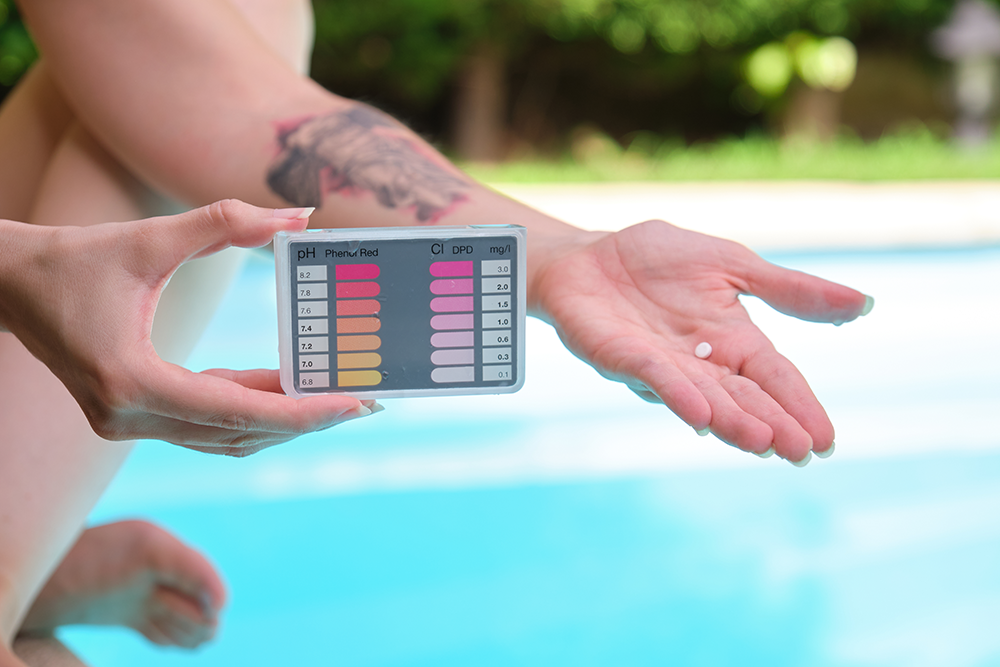
Even when using quality chemicals, the condition of the water must be checked regularly. The most important parameters are:
- pH;
- free chlorine / active oxygen.
Recommended testing frequency:
- once a week during the active season;
- more often during hot weather;
- after rain;
- after a larger number of people have used the pool.
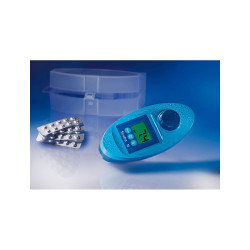
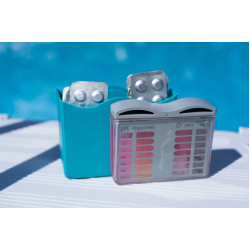
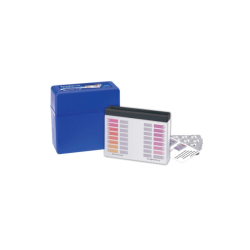
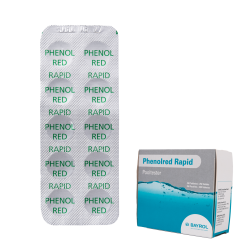
Testing can be done using:
- drop testers;
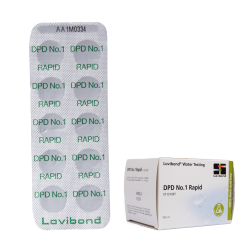
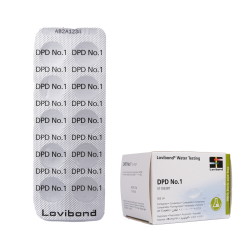
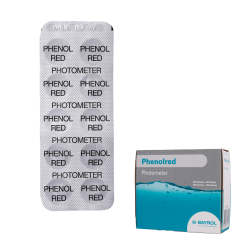
- tablet testers;
- test strips;
- electronic meters;
- smart photometric testers.
Regular testing helps detect problems early, before the water becomes green or cloudy.
8. Common pool chemical mistakes
Even with good products, mistakes can still be made that disrupt the water balance or damage pool equipment.
Adding chlorine before adjusting pH
This is one of the most common mistakes. If the pH is incorrect, chlorine will not work effectively and will be used up much faster. Always adjust the pH first, and only then use chlorine.
Mixing different chemicals
Different products must not be mixed together, especially concentrated chlorine products. Chemicals should be used separately, following the manufacturer’s instructions and allowing water circulation to work.
Overdosing chemicals
More chemicals do not necessarily mean a better result. Overdosing can:
- irritate the skin and eyes;
- damage the pool liner;
- harm health.
Throwing tablets directly into the pool
Chlorine tablets should not be thrown directly onto the bottom of the pool. They can:
- bleach the liner;
- leave stains;
- damage PVC surfaces.
Tablets should only be used in the skimmer or in a floating dosing system.
Filtration is not running after adding chemicals
If the filtration is switched off:
- chemicals distribute unevenly;
- “high concentration zones” may appear;
- water maintenance becomes ineffective.
After adding chemicals, it is recommended to leave the filtration running for at least several hours, and after chlorine shock – for a full day.
Conclusion
Proper pool chemical maintenance is not complicated if the main sequence is followed: first pH, then disinfection, continuous filtration (circulation) and regular testing. Most water problems are not caused by a lack of chemicals, but by incorrect use. A stable water balance helps reduce chemical consumption, keep the water clearer and ensure more pleasant swimming throughout the season.