Sauna Stones / Bath Stones
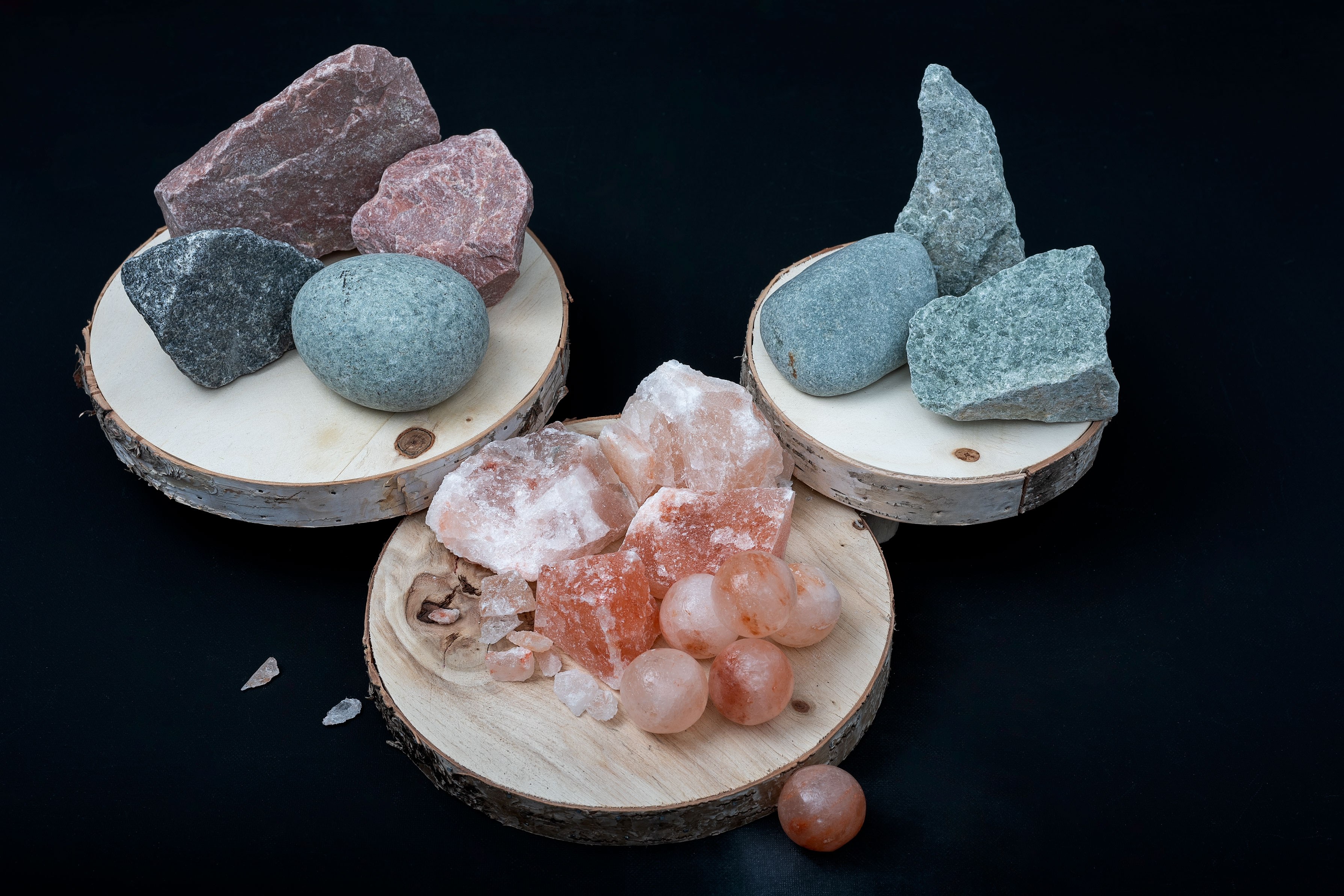
Sauna stones (also known as bath stones) are the heart of the sauna. Properly selected and carefully arranged stones store a large amount of heat, release it evenly, and when water is poured on them – create a pleasant wave of fine steam droplets. When choosing stones, the key factors are high heat capacity, resistance to thermal stress, and safety. Visit our sauna accessories page and find the right sauna stones for your setup. If needed, we can also provide full stone sets for complete stove filling.
How to choose sauna stones?
- Rock type: reliable choices – gabbro-diabase, olivine dolerite, peridotite, or volcanic basaltic origin. Avoid unknown stones (e.g., river stones) – they may crack or even explode.
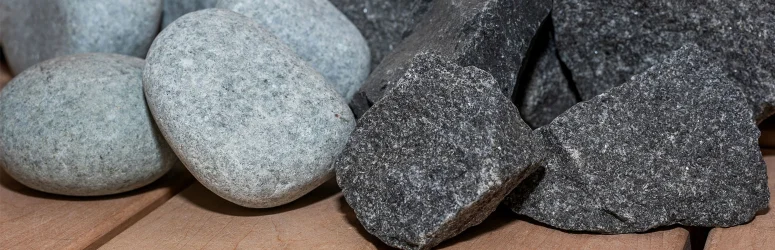
- Fraction size: bottom layer – larger stones (7–10 cm), top layer – smaller ones (5–7 cm). This improves air and steam circulation.
- Surface: rough (not glazed or coated), without cracks or internal cavities. Smooth decorative stones look nice but hold heat and steam worse.
- Cleanliness: rinse stones before stacking to prevent dust buildup inside the heater.
- Electric or wood-burning stove: for electric stoves, follow the manufacturer’s recommended fraction and weight; for wood-burning stoves – choose stronger, more heat-resistant stones.
Proper stacking and maintenance
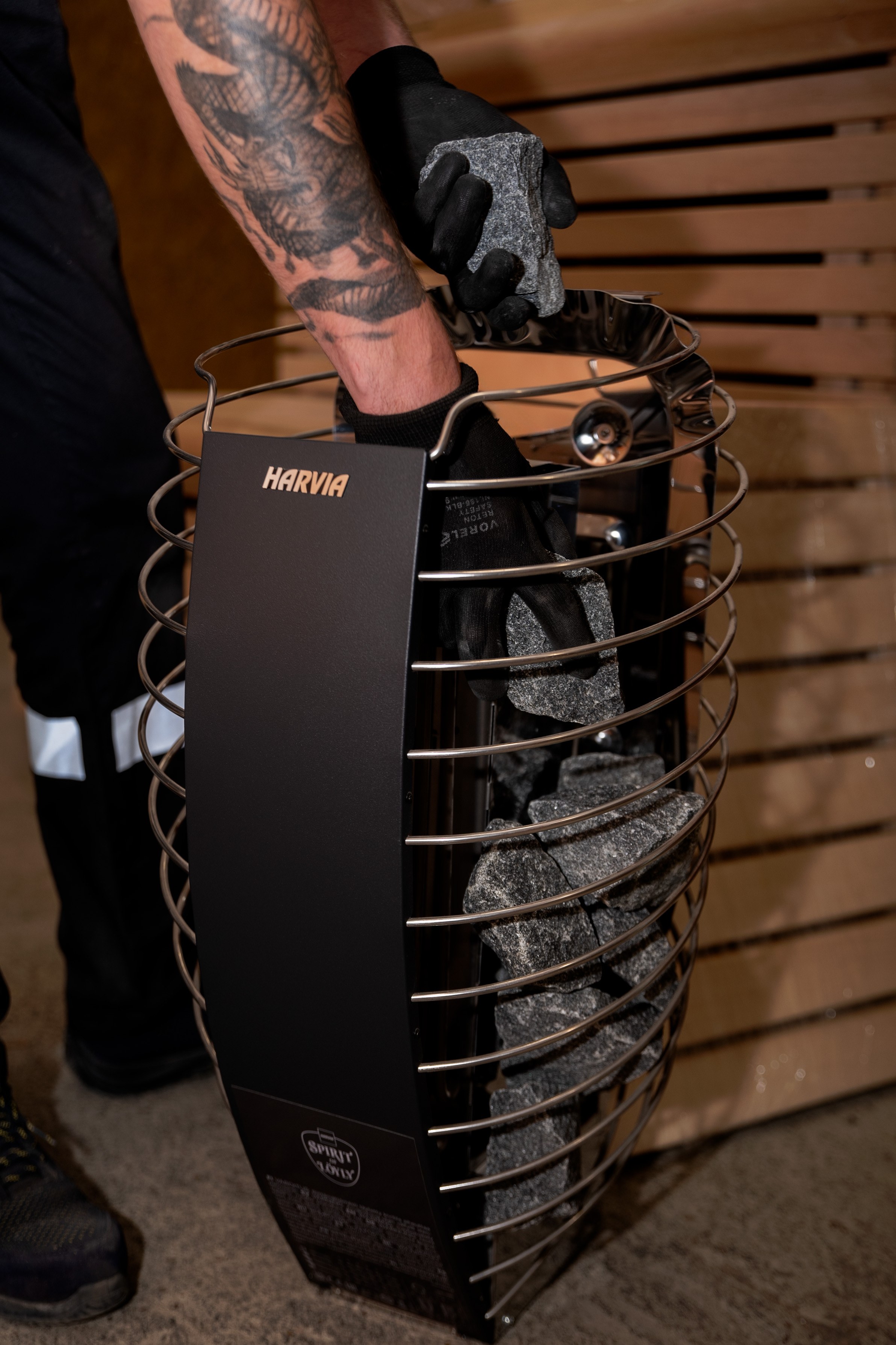
- Do not stack too tightly: leave air gaps – this protects heating elements and improves steam quality.
- Layering: larger stones at the bottom, smaller on top; every 6–12 months, rearrange and swap the layers.
- Cleaning: periodically wash off accumulated salt, limescale, and dust.
- Water: use clean, fragrance-free water for steaming; hard water promotes scale buildup.
When should sauna stones be replaced?
It is generally recommended to replace sauna stones every 3–6 years (depending on usage frequency, water quality, and heater type). If you use the sauna often (e.g., 3–4 times per week), inspect the stones each season.
Clear signs that stones need replacement
- Fragility and cracking: stones begin to crumble, producing small fragments.
- Clogged air gaps: poor air circulation, slower heating, uneven steam.
- Changed steam quality: water poured produces “hard,” harsh steam.
- Whitening or white deposits: pores close and residues accumulate, making the steam water look “chalky.”
- Unusual sounds: crackling or dull ringing when pouring water.
Note: stones undergo major thermal stress (heating → shock cooling), so regular inspection and replacement are essential. Old stones may obstruct air circulation and, in extreme cases, damage electric heating elements.
Safe operation
- Always follow the heater manufacturer’s instructions for stone quantity (kg) and fraction.
- Do not pour essential oils or fragrances directly onto heating elements; pour only diluted solutions onto the stones if permitted.
- Perform a full inspection every 6–12 months and replace cracked stones.
Which salt is suitable for the sauna?
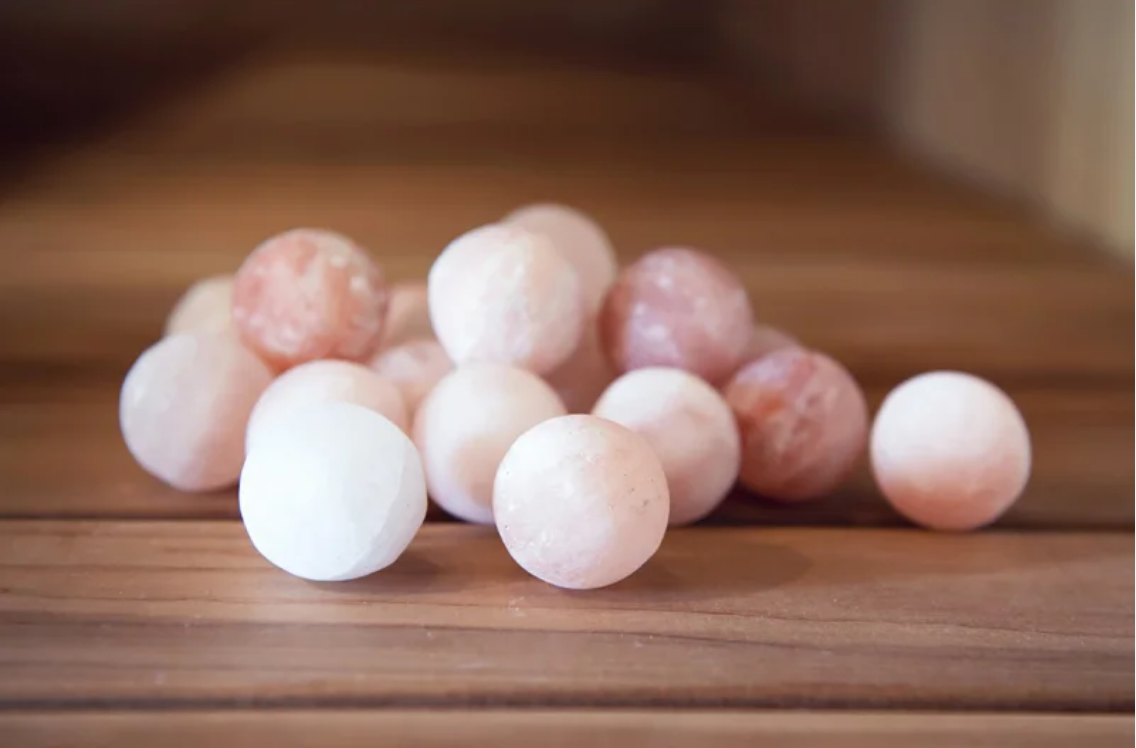
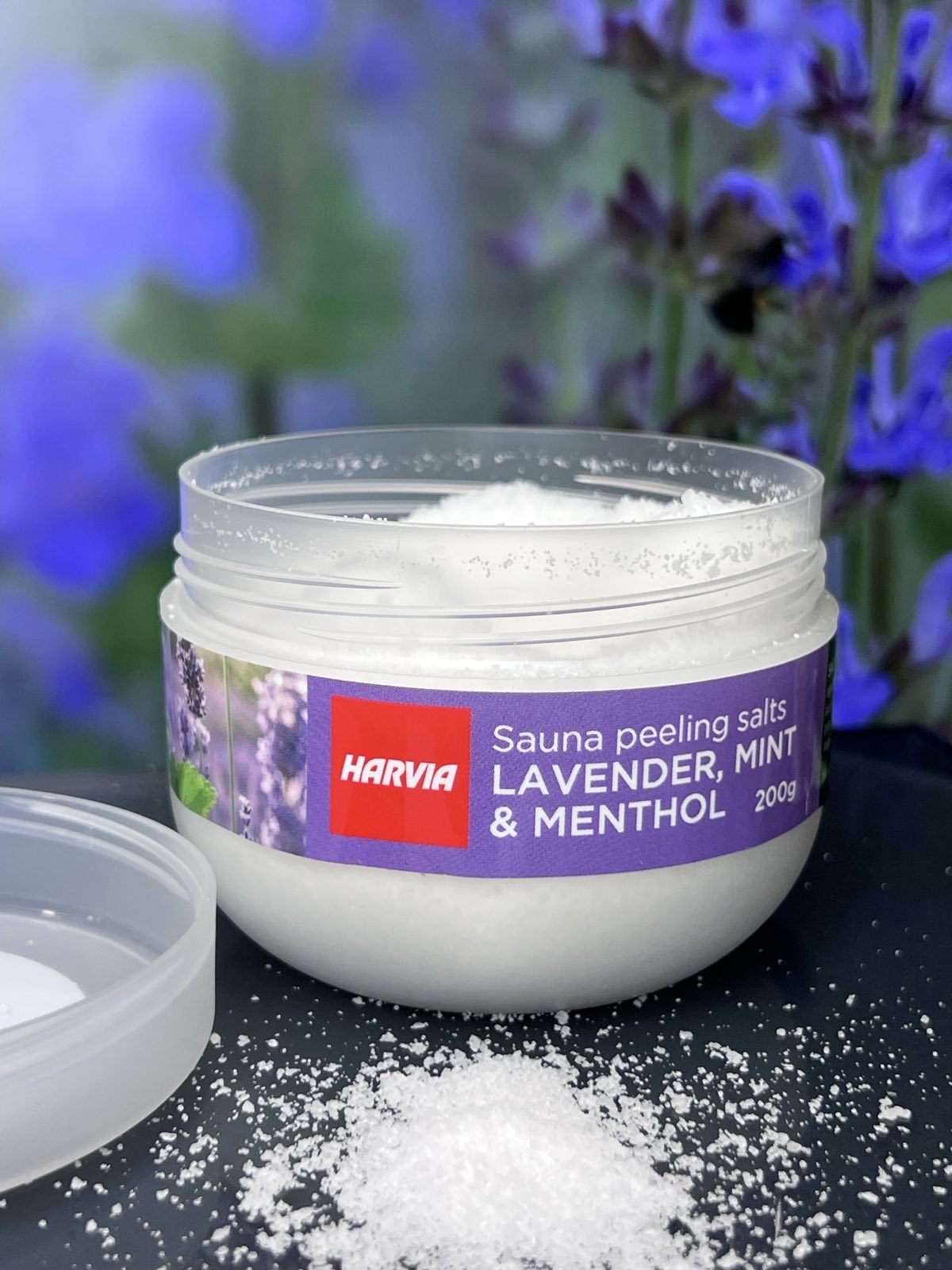
Sauna salts are a popular sauna accessory that promotes sweating and gently exfoliates the skin. This helps remove dead skin cells, leaving the skin cleaner, smoother, and more elastic after the session. Choose high-quality Himalayan salts or specialized sauna salts designed for high-temperature use.
How and when to use sauna salt?
- Timing: use salt during the second sauna session when the body is warm and pores are open.
- Application: gently rub a small amount of salt onto damp skin (avoid the face), leave for 1–2 minutes, then rinse off.
- Frequency: once a week is enough for most people; less often for sensitive skin.
- Men’s tip: avoid applying salt on freshly shaved skin – it may cause irritation.
Safety and precautions
- Avoid salt use if the skin is damaged, inflamed, or affected by eczema or other dermatological conditions.
- Do not use on mucous membranes or freshly shaved areas.
- If you experience strong stinging or pain – rinse immediately and discontinue use.
FAQ about sauna stones and salts
Can I mix stones of different rock types?
Yes, if both types are sauna-grade and of similar durability. Usually, one reliable rock type is sufficient.
How many stones does my heater need?
It depends on the heater model. The manufacturer specifies the recommended stone weight (kg). Too few stones result in poor steam; too many cause overheating and poor airflow.
How often should I rearrange the stones?
At least once per season (every 6–12 months). If used frequently – more often. During rearranging, remove cracked stones and renew layering.
Can I use regular kitchen salt in the sauna?
Not recommended. Use special sauna salts or natural Himalayan salts designed for sauna conditions and cosmetic use.
Conclusion and recommendations
High-quality sauna stones are essential for producing soft, pleasant steam and ensuring a safe sauna experience. Choose thermally durable rocks, appropriate sizes, stack correctly, and inspect them regularly. Replace stones every 3–6 years, or more often with heavy use. Sauna salts are a great addition for skin care and detox, but use them during the second session and follow safety instructions.
If you’re looking for reliable options, visit our sauna accessories and sauna stones categories – we’ll help you select the perfect full set for your heater.