

















Chlorine for the pool, how to regulate its amount
A typical pool chemical monitoring system monitors pH and ORP (oxidation reduction potential) as indicators of chemical activity in disinfection. Chlorine disinfects water, reacts with pollutant oxidation processes. These chemical reactions occur with chlorine or chloramine compounds. Unlike free chlorine, pool chlorine is not an effective solution. Since free chlorine is consumed by the pool through sanitary protection, it is very important to monitor the residual free chlorine concentration. Free pool chlorine comes in two main chemical forms:
• Hypochlorous acid (HOCl). Hypochlorous acid is the most effective form of free chlorine for removing contaminants.
• Hypochlorite ions (OCl-).
 Some pool operators use DPD test kits to monitor chlorine levels in the water. However, DPD, the chemical that reacts with chlorine to produce the red color, does not distinguish between free chlorine and combined chlorine. Because hypochlorous acid and hypochlorite ion are in the form of free chlorine, DPD test kits do not provide information on the relative concentration of these sanitizing agents.
The easiest way to accurately measure and regulate chlorine is by carefully monitoring the ORP. ORP (Oxidation Reduction Potential) readings are a measure of surgical sanitation activity. The ORP value is very sensitive to variations in hypochlorous acid because HOCl is a form of chlorine, which is the strongest oxidant.
Chlorine reacts with a higher pH for the pool
The amount of chlorine a pool needs to maintain quality pool water depends on many different factors. When more people visit the pool, the concentration must be higher to accommodate the increased contamination. Intense sunlight can reduce the effectiveness of chlorine, requiring greater sanitation. Pool water pH affects chlorine activity by affecting the balance of hypochlorite ions and hypochlorous acid. When the pH of the pool water is too high, the concentration of hypochlorous acid is lower. As a result, chlorine is less effective for the pool and oxidizes pollutants.
Pool chlorine can come in several forms
Pool chlorine can be liquid or tablet. Which option to use is a personal choice for everyone. We will discuss both of them here and the choice can be made individually as per the needs. Chlorine for the pool is divided into:
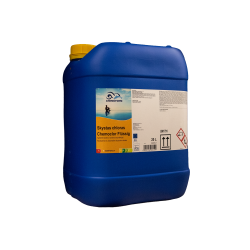
• Liquid chlorine. Liquid pool chlorine is the cheapest way to add chlorine to your pool. It is simply poured directly into the water in front of the backflow to disperse throughout the pool. Liquid chlorine dissipates quickly because it does not contain additional substances that are released slowly. Therefore, the pool water needs to be changed frequently. The shelf life of liquid chlorine is only a few weeks.
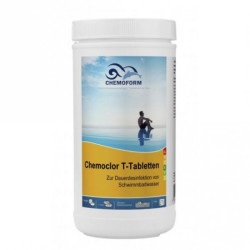
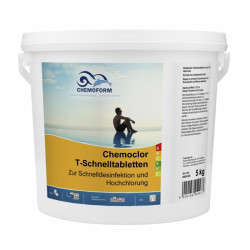
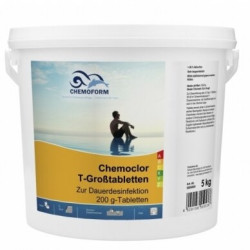
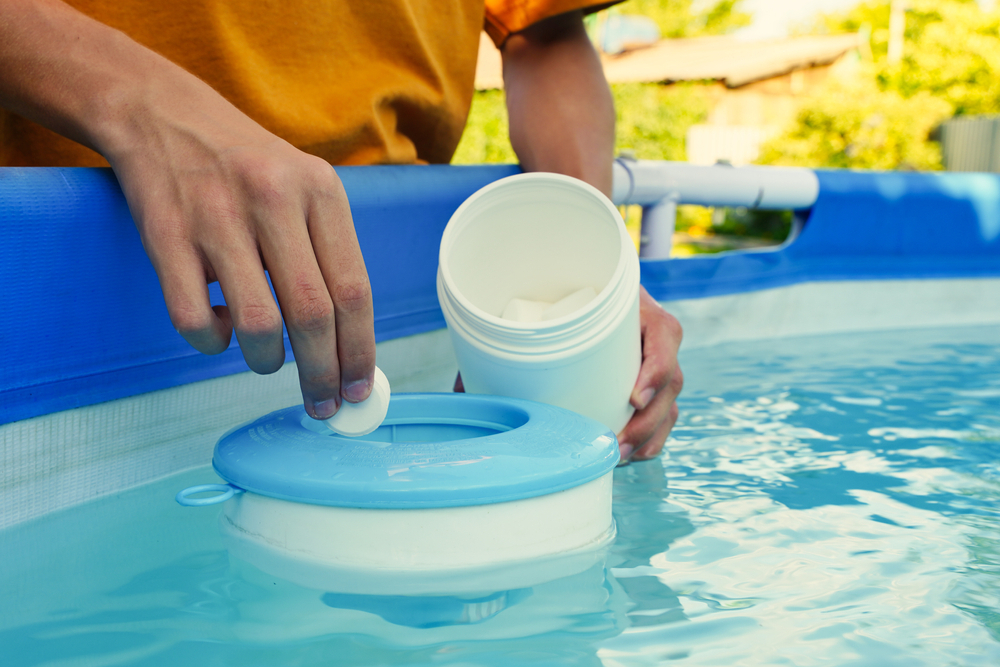
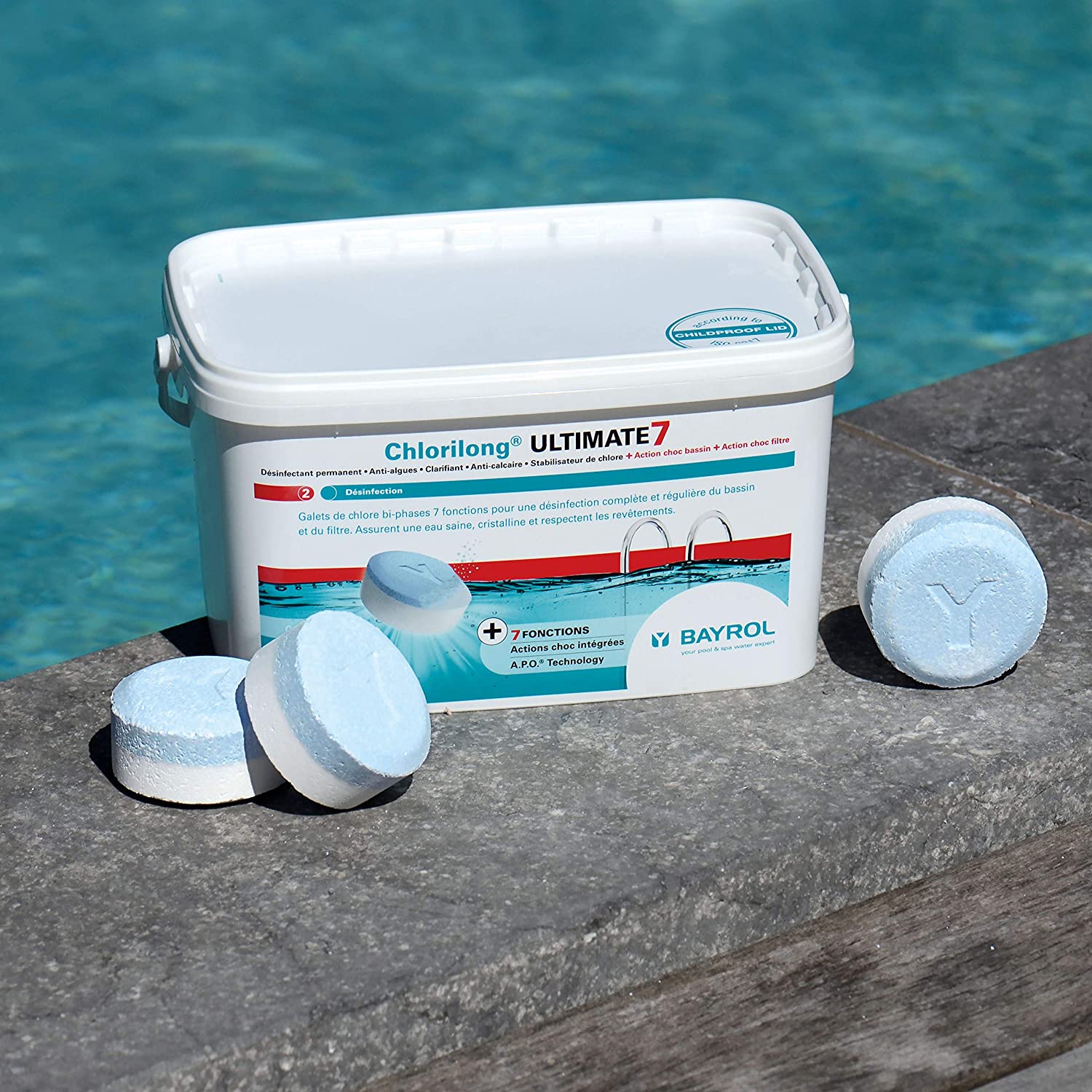
• Chlorine tablets. Chlorine for the pool can also be in the form of tablets. They come in either 1-inch or 3-inch sizes. Three-inch tablets are a more cost-effective way to keep your pool's chlorine level at its optimum. Chlorine tablets for the pool keep well and dissolve consistently, and they are less work. In most cases, several tablets are added to one chlorinator, thus gradually dissolving. Three-inch tablets are also used in floating chlorinators, which slowly disperse chlorine into the pool.
What is important to know about pool chlorine?
Pool users sometimes wonder if it is safe to swim in a pool with chlorine in it. However, if the pool becomes particularly contaminated with bacteria, you can have serious health problems. Pool chlorine is the lesser of two evils when it comes to pool safety. But if you really don't like chlorine, if it irritates your skin or eyes and the smell irritates you, you can choose chemical products without chlorine. They also clean water effectively and efficiently, but can be more expensive than chlorine.
There may be cases where too much chlorine is accidentally added. Then, of course, the question arises as to what is the maximum permissible level of chlorine in the pool. It should be noted that a commercial swimming pool should contain about 3-5 ppm of chlorine. However, if the readings are around 5-10 ppm, the water is still safe to swim in, but there is a risk to the equipment. It is recommended that chlorine in the pool does not exceed 8 ppm.
If chlorine has been added to the water, it is recommended to wait 20 minutes to an hour. It is optimal if you bathe after 2-4 hours. It is very good to wait until the chlorine in the pool does not exceed 5 ppm or after 24 hours.
From time to time, the pool water must undergo shock chlorine therapy when the chlorine level is suddenly raised. In this way, bacteria are quickly and effectively killed. This process takes longer to properly adjust the water, so it is recommended to wait overnight before starting to swim. It is good when the pump is on and the water is circulating. For a few days, such a pool will still have higher levels of chlorine, but after a few days it will stabilize. If the pool water is still cloudy after the shock therapy, there is no need to worry. This is a normal process in which solutes are released, so they can be seen. This cloudiness is temporary and will clear up within a few days and the filter will help.
Pool chlorine is an excellent, inexpensive means of keeping your pool water extremely clean and clear.