

















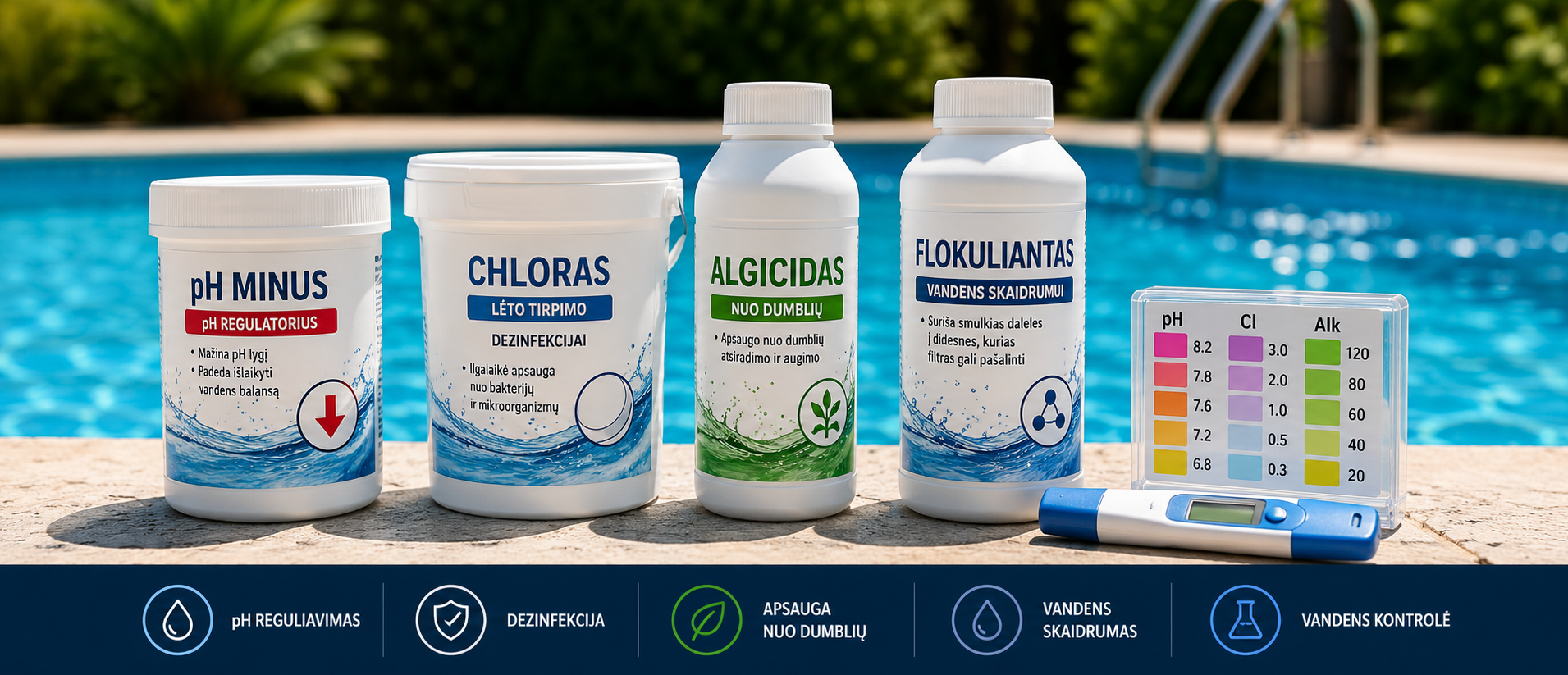
5 Essential Pool Chemicals
For many people, the pool season begins in a very similar way: the pool is filled with water, the sun is shining, and everything looks perfect. However, after a few weeks, the first problems often appear — the water becomes cloudy, the walls feel slippery, a greenish tint appears, or an unpleasant smell develops.
Very often, the problem is not a “bad pool”, but incorrect or chaotic water maintenance.
Many new pool owners start with random products, “miracle tablets”, or excessive amounts of chemicals. In reality, stable and clean pool maintenance usually requires only a few basic products — the most important thing is to understand what they are used for and when to use them.
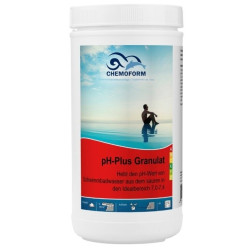
1. pH regulator – the most important part of pool chemistry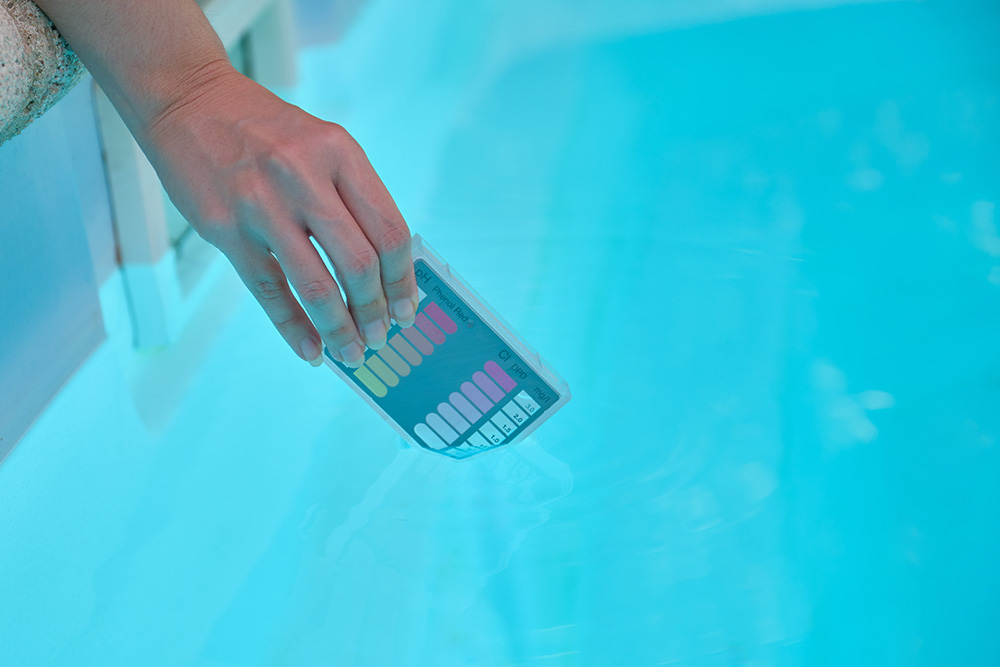
Although many people think chlorine is the most important product, pool water balance always starts with the correct pH level.
If the pH is too high or too low:
- chlorine becomes less effective,
- the water may become cloudy,
- limescale deposits may start to build up,
- skin and eyes may become irritated.
That is why pH testing and adjustment is the first step before using almost any other pool chemical.
The most commonly used products are:
- pH Minus products — when the pH is too high,
- pH Plus — when the pH is too low.
A stable pH helps not only to keep the water clear, but also to reduce overall chemical consumption.
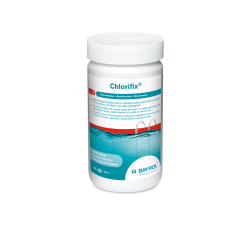
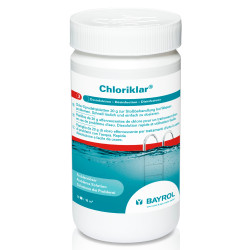
2. Chlorine – the main disinfection product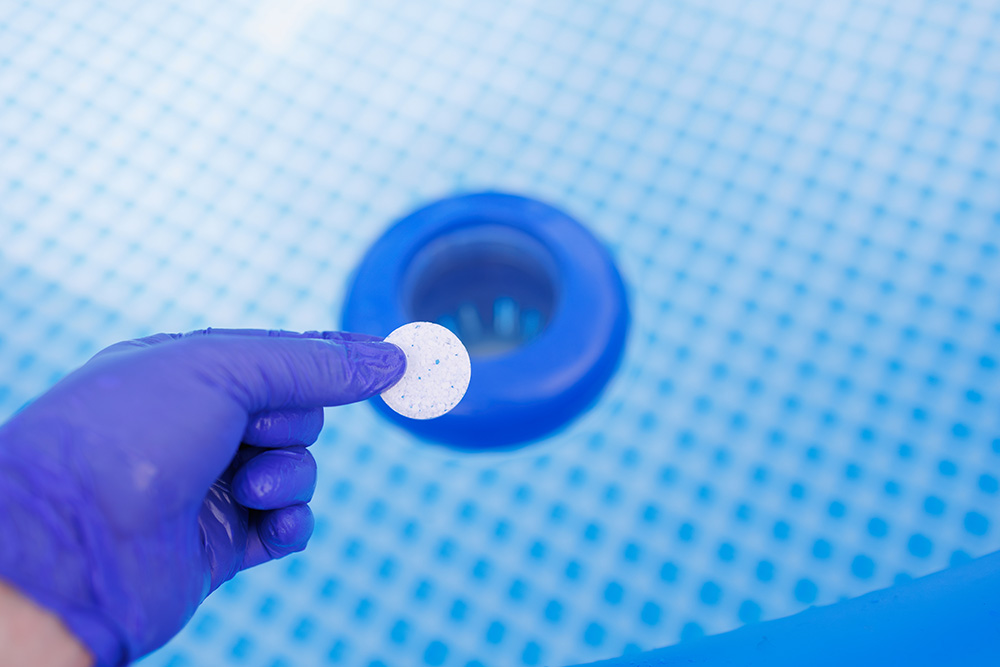
Chlorine is responsible for controlling bacteria, microorganisms, and organic impurities in pool water.
However, one of the most common mistakes is thinking that “the more chlorine, the better”.
In practice, it is important to understand the difference between different types:
Slow-dissolving chlorine
Used for regular ongoing pool maintenance. It gradually disinfects the water and helps maintain a stable chlorine level.
Fast or shock chlorine
Used:
- at the beginning of the season,
- after heavy pool use,
- when cloudiness or a greenish tint appears,
- after heavy rain or heatwaves.
It is important to understand that “chlorine shock” is not an everyday product. Using it too often can cause discomfort.
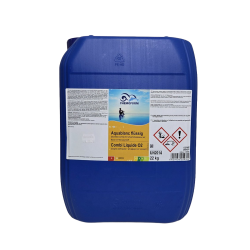
3. Algaecide – protection against green water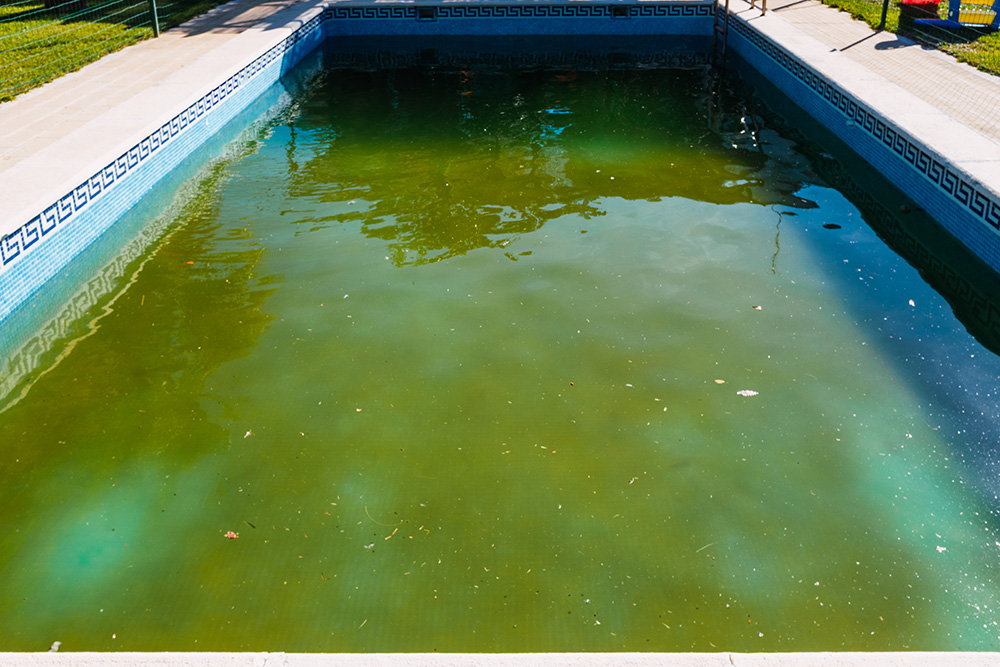
One of the most unpleasant pool problems is green water and slippery walls.
People often think this means “not enough chlorine”, but in reality, the problem often starts with algae growth.
This is where algaecide is used — a product that helps prevent algae from developing.
It is especially relevant:
- on hot days,
- for outdoor pools,
- when the pool receives a lot of direct sunlight,
- for regular pool maintenance.
Algaecide is usually used preventively in small doses, not only when the water has already turned green.
4. Flocculant – when the water looks “almost clean, but not clear”
Sometimes pool water is not green or dirty, but it loses its clarity and becomes cloudy.
In such cases, the problem is often not disinfection, but very fine particles that the filter can no longer collect effectively.
This is where a flocculant or coagulant is used.
Its purpose is to:
- bind fine particles into larger ones,
- help the filtration system collect them,
- restore water clarity.
This is one of the most underestimated but very effective products for improving water quality.
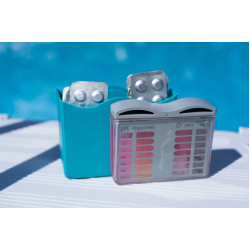
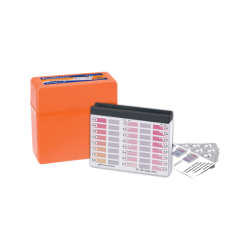
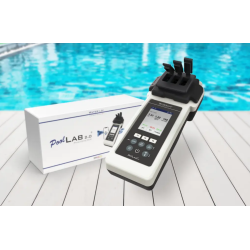
5. Water testers – so chemicals are not added “by eye”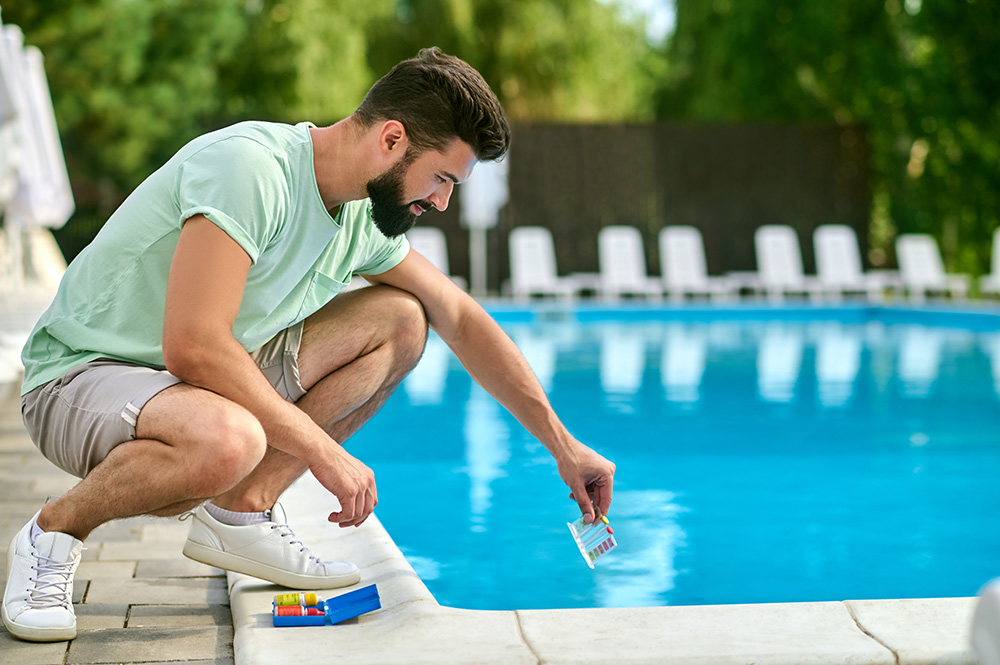
One of the most common causes of problems is using chemicals without checking the actual water parameters.
Too much chemistry can also be a significant problem.
That is why water testing is an essential part of regular maintenance.
The most commonly used options are:
- test strips,
- drop testers,
- digital meters.
They allow you to monitor:
- pH,
- chlorine level,
- alkalinity,
- other water parameters.
Regular testing helps to:
- use fewer chemicals,
- avoid water quality problems,
- maintain more stable water quality throughout the season.
Products that are often bought too early
Beginner pool owners often start with additional or “miracle” products, even though the basic water parameters have not yet been balanced.
The products most often bought too early include:
- various fragrances,
- multifunctional tablets,
- “super clarifiers”,
- additional special additives,
- aggressive chemical products.
In reality, most pool problems are solved by:
- stabilising the pH,
- using chlorine or active oxygen correctly,
- ensuring good filtration,
- testing the water regularly and using pool chemicals properly.
Therefore, at the beginning, the most important thing is not more chemicals, but correct basic maintenance.
Conclusion
Clean and clear pool water usually does not depend on a large amount of chemicals. It depends on consistent and correct maintenance.
In most cases, stable pool maintenance requires:
- a pH regulator,
- the right chlorine or active oxygen,
- algaecide,
- flocculant,
- regular water testing.
Most importantly — do not wait until the problem has already appeared.
A properly maintained pool requires fewer chemicals, fewer additional expenses, and allows you to enjoy clean water throughout the entire season.