Summer is the time when the pool becomes one of the main places to spend free time. Although this year's swimming season has not yet gained momentum (due to cooler than usual weather), pool owners are always the first to test the water. Preparing the pool after the winter season, intensive swimming, heat, and improper maintenance during the season can cause many different problems. In this article, we will discuss the 10 most common pool problems and provide quick and practical solutions.
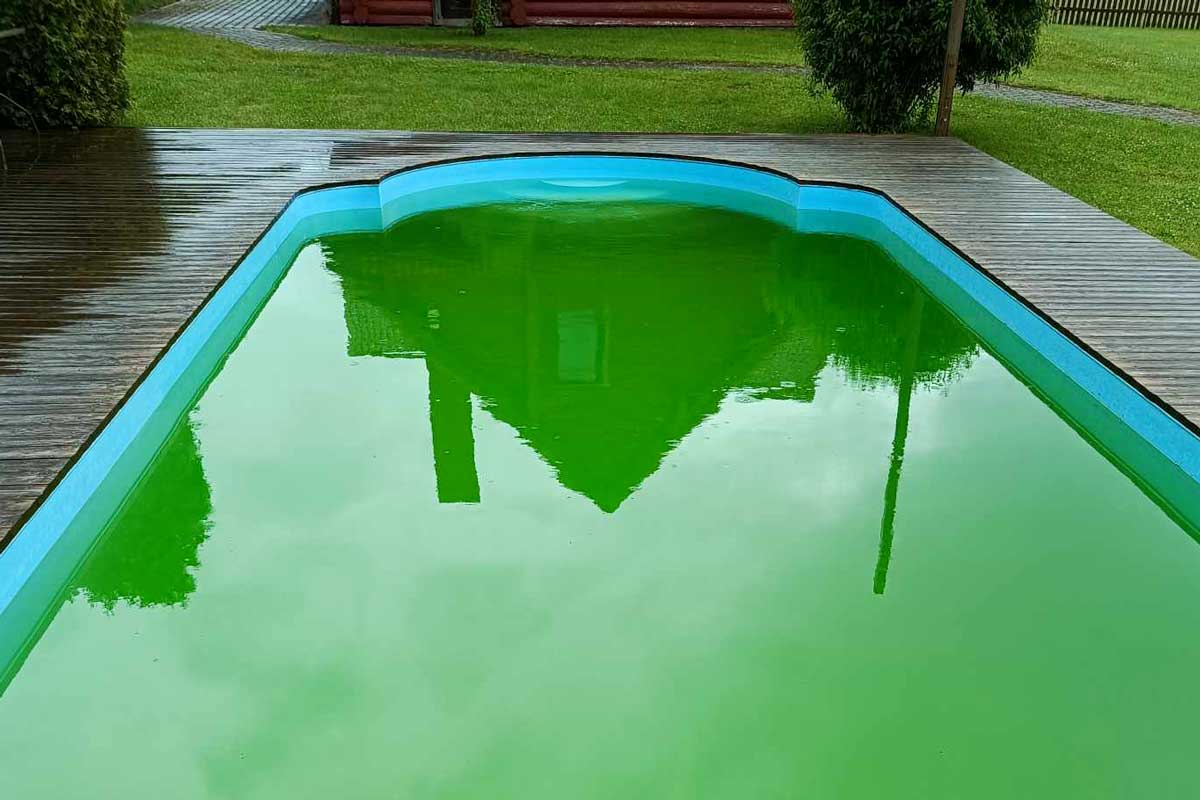
1. Green water
Green pool water usually indicates algae growth caused by insufficient chlorine or poor water filtration. Check and adjust the pH level (the optimal range is 7.0–7.4), increase the chlorine content using a shock dose, use an algae remover, and thoroughly clean the filters.
2. Cloudy or milky water
Cloudy or milky pool water is usually caused by inadequate filtration, insufficient chlorine, or excess lime. To solve the problem, clean the filters, check and adjust the pH and chlorine levels, add flocculants (water clarifiers) and filter the pool continuously for at least 24 hours.
3. Unpleasant smell of pool water
An unpleasant smell in the pool is usually not caused by excess chlorine, but by chloramines – compounds formed when chlorine reacts with sweat and other organic substances. This is a sign that too many organic contaminants (sweat, urine, cosmetic residues) have accumulated in the water and reacted with the chlorine.
It is recommended to perform shock chlorination of the pool, improve ventilation (especially in indoor pools), and encourage visitors to take a shower before swimming.
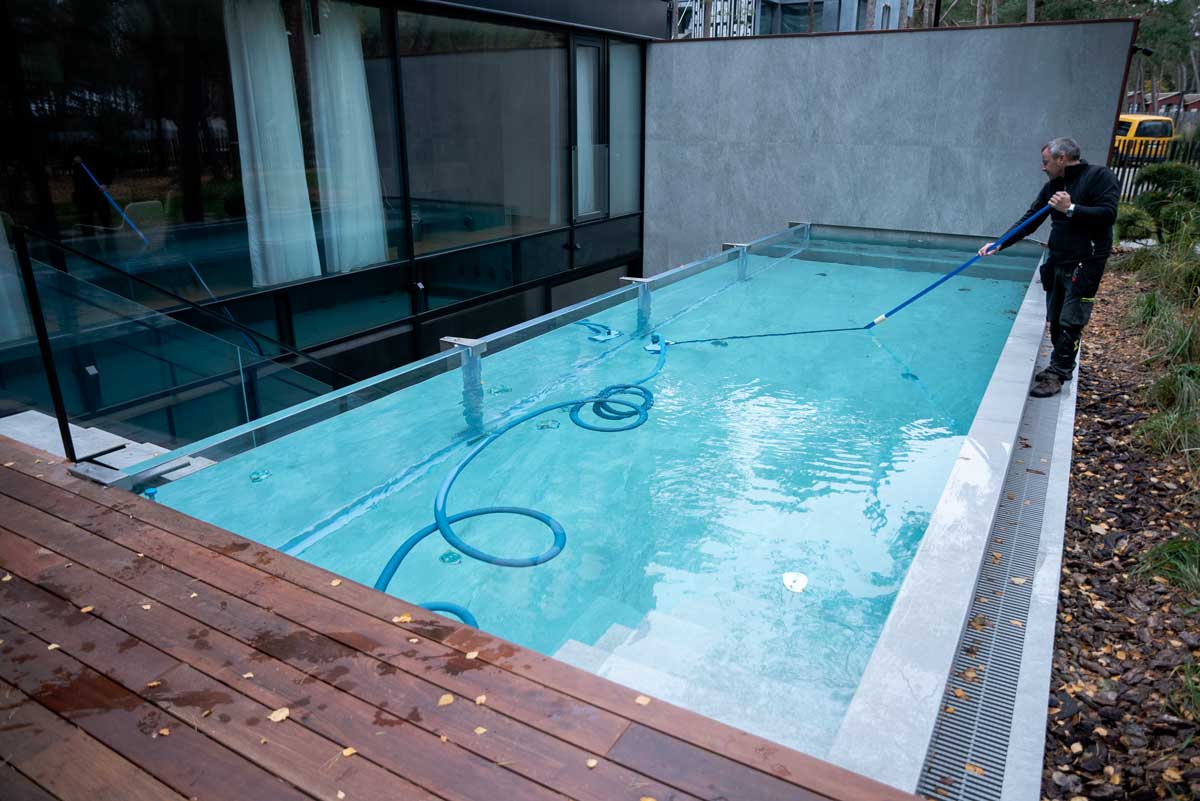
4. Slippery pool edges or bottom
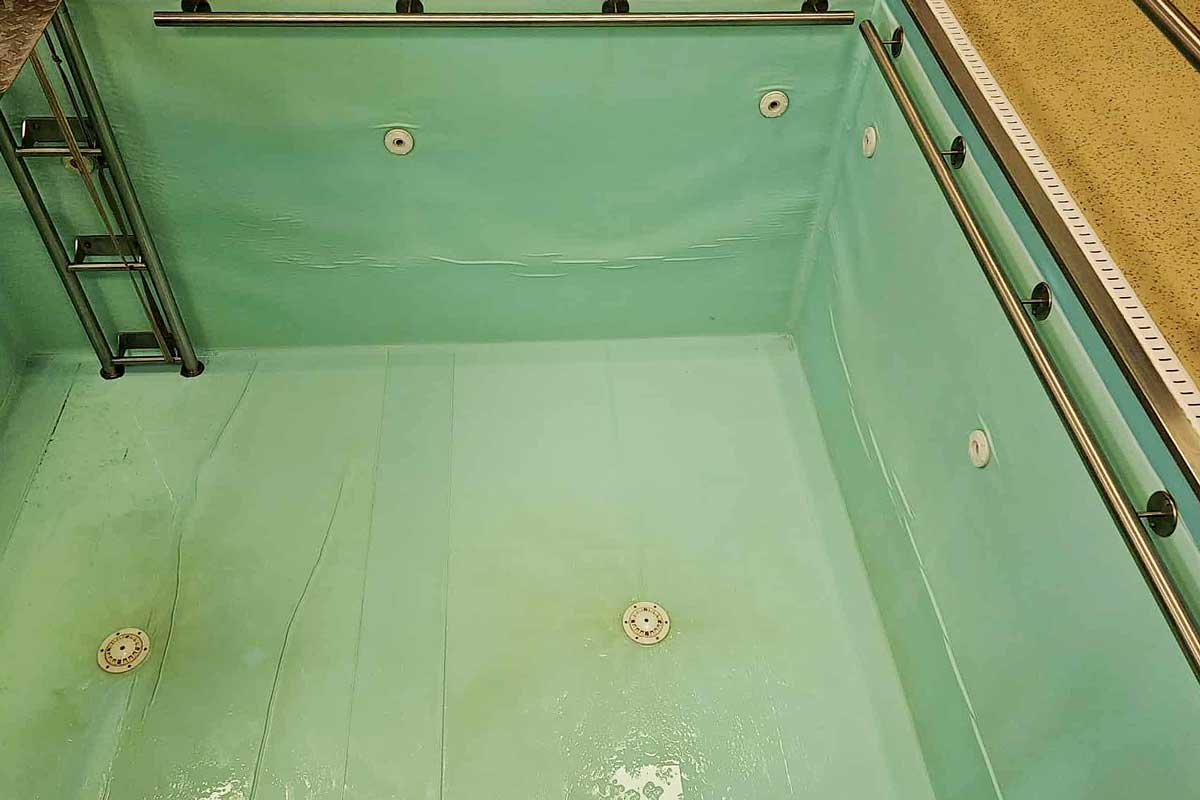
Slippery pool edges (jacuzzi or other hydromassage pool/hot tub) and bottom indicate algae accumulation in the water. We recommend using a special pool scrubber to effectively remove algae buildup. Add an algae remover and clean the bottom and walls regularly.
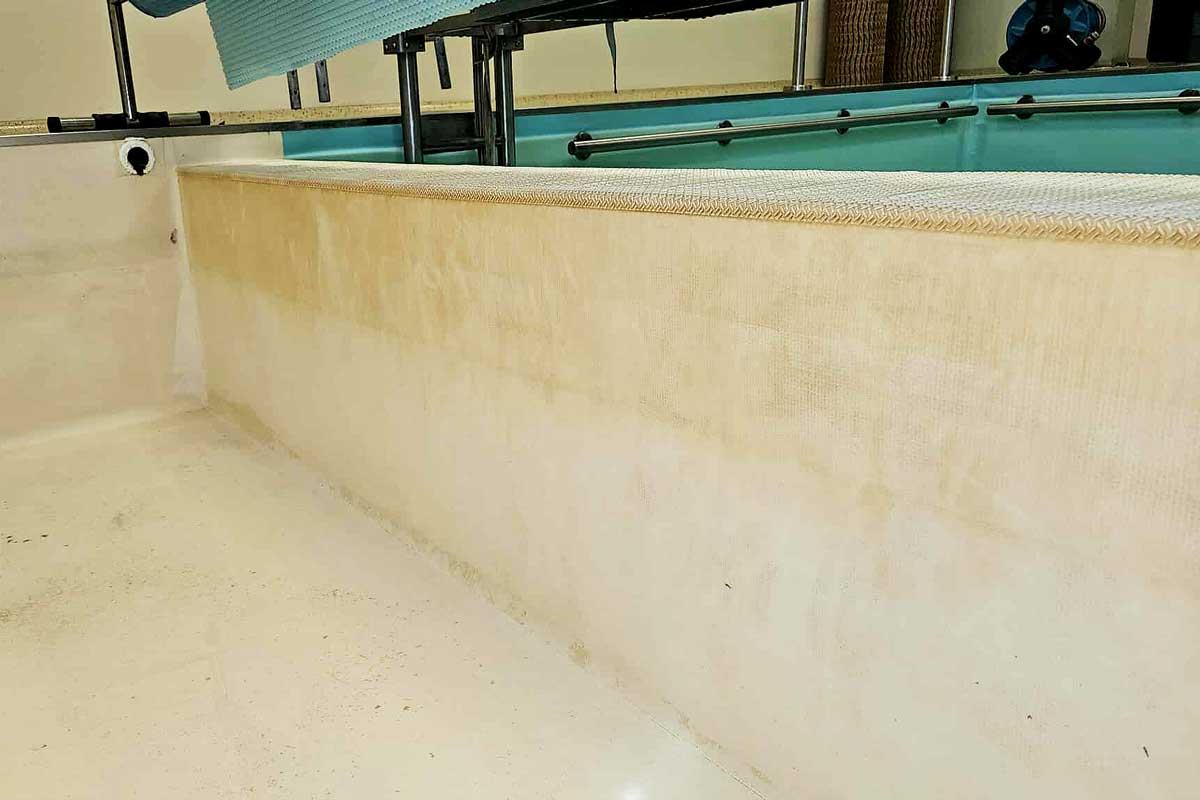
5. Low water level
A drop in the pool water level can be caused by natural evaporation, a possible leak, or even excessive overflow (if it is a hydromassage pool, for example). To determine the exact cause, monitor the water level carefully for several days. If you notice that the level drops by more than 1–2 centimeters per day, this may indicate a leak. In this case, immediately check the pumps for leaks, valves, and all hose connections, or call a pool maintenance specialist immediately.
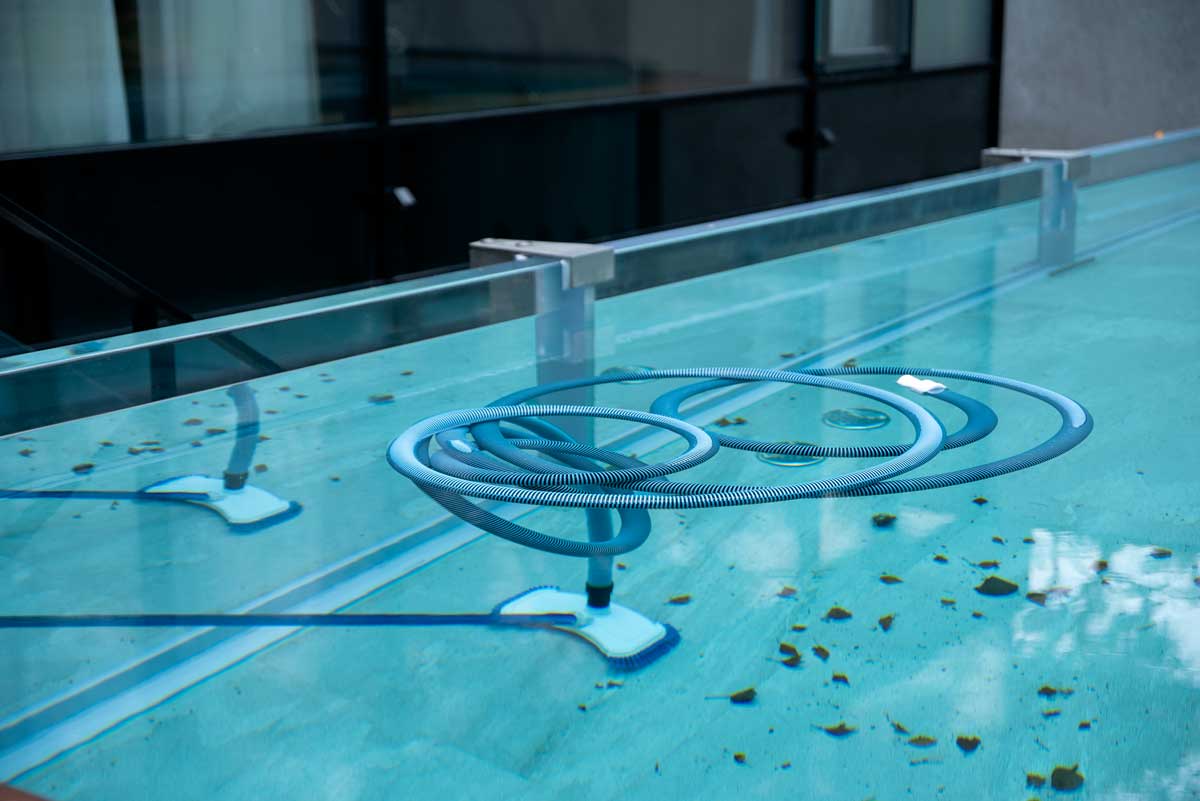
6. The pool pump is not working or is running slowly
If the pool system is not working properly, the cause may be a clogged filter or air entering the system. First, clean the filtration system to ensure proper water circulation. It is important to check that the water level is sufficient (it should cover the pump suction opening). It is worth tightening all hoses to ensure that the system is airtight and no air can enter it.
7. Foaming water
Foaming water (especially in a hydromassage pool or hot tub) is most often caused by the use of cosmetics, detergents, or low-quality pool chemicals. Avoid using foaming products before swimming in the pool. Also, change the water more often and use special anti-foaming agents if necessary.
8. Irritated skin or eyes
An incorrect pH level or excessive chlorine can irritate the skin and eyes and damage the pool equipment. To avoid this, it is important to check the water parameters regularly and adjust them according to the recommendations: the pH should be between 7.0 and 7.4, and the free chlorine content should be between 1 and 3 ppm.
9. Brownish or yellowish water
The presence of metal ions such as copper or iron in the pool water (if the pool is filled with water from a reservoir) can cause discoloration of the water and stains on surfaces. It is recommended to use special metal neutralizers, maintain the proper pH level, and carefully perform shock chlorination of the water.
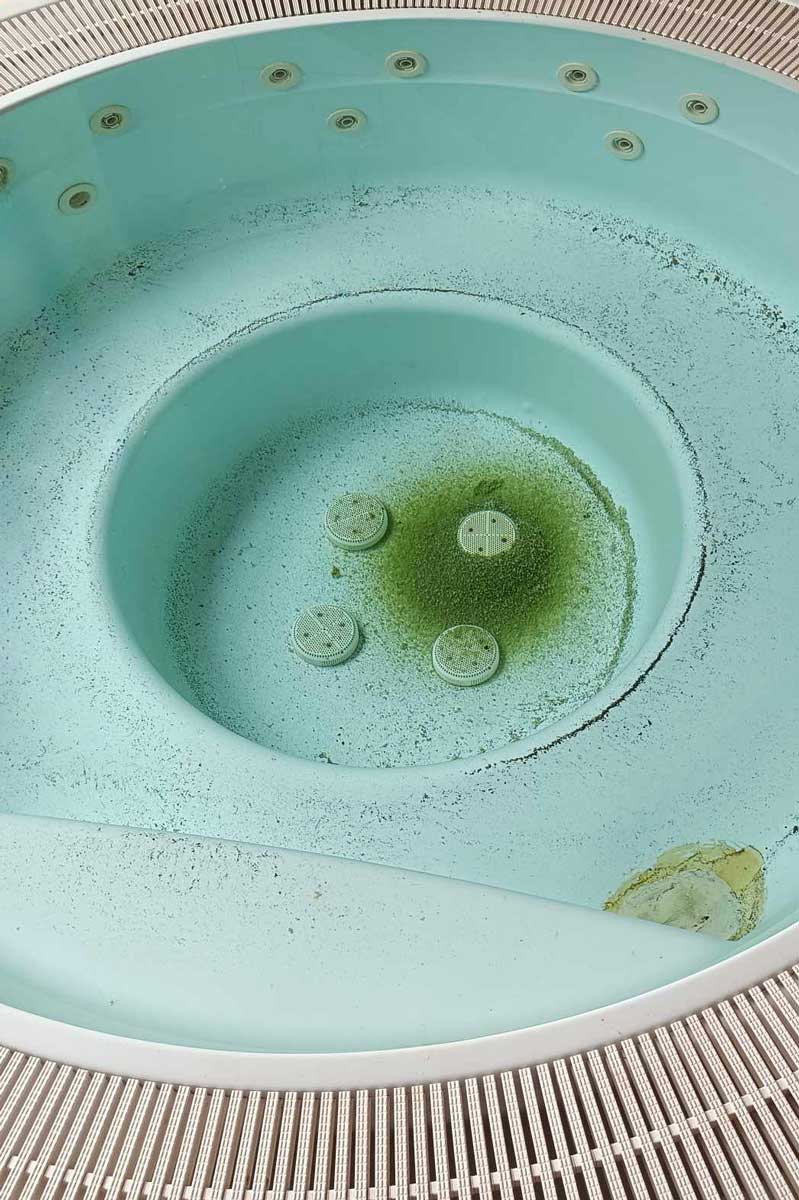
10. Blisters or peeling on the pool surface
Damage to the pool surface may be caused by improperly prepared substrate, UV exposure, or incorrect use of chemicals. Special repair strips can be used as a temporary solution, but to solve the problem permanently, it is advisable to consult a specialist who will properly repair the surface.